
About

A consortium built to close an implementation gap

The Africa Strategic Consortium for Integrated Peace and Development is a company limited by guarantee, incorporated in the United Kingdom, formed for a single purpose: to convert African Union social development and crime prevention policy into portfolios that governments can implement and investors can finance.

The continental policy architecture is not the constraint. Agenda 2063, the Social Agenda, the child protection and humanitarian frameworks and the crime prevention plan of action already set out what is required. What is missing is the intermediary capacity to translate those commitments into costed delivery structures with governance, oversight and capital attached.

ASCIPD is pre-launch. There are no partners, no board and no programmes to report yet. This site sets out the mandate, the six-pillar architecture and the terms on which governments, investors and strategic partners can engage with the consortium as it forms.

How the consortium is constituted, the board roles being formed and the process by which partners are admitted are set out on the Governance page.

The shift is from financing projects that end to underwriting systems that hold.

Vision and mission

Our Vision. A resilient and prosperous Africa where every individual, family, and community can thrive free from vulnerability, exploitation, and crime.

Our Mission. To unite diverse actors around a common, African Union-aligned implementation framework to strengthen social welfare, protect vulnerable populations, prevent crime, and build inclusive communities across the continent.

Seven strategic objectives

The Africa Strategic Consortium for Integrated Peace and Development (ASCIPD) pursues seven interconnected strategic objectives, each designed to address specific dimensions of social vulnerability while contributing to the broader goal of continental resilience.

  1. Strengthen Social Protection Systems

    Build and reinforce community-based social protection systems that safeguard children, families, persons with disabilities, and older persons from vulnerability, exploitation, and marginalization, in alignment with the African Union's Agenda 2063 and related continental frameworks.
  2. Protect Vulnerable Populations

    Prevent and respond to all forms of violence, abuse, and harmful practices against children, women, and marginalized groups including child marriage, female genital mutilation (FGM), online sexual exploitation, and gender-based violence through community-led interventions and systemic strengthening.
  3. Prevent Crime and Substance Abuse

    Reduce illicit drug trafficking, transnational organized crime, and substance abuse through evidence-based prevention education, community-based treatment, rehabilitation programs, and sustainable alternatives to illicit livelihoods, in alignment with continental drug control and crime prevention frameworks.
  4. Promote Economic Inclusion

    Address economic drivers of vulnerability by creating inclusive economic opportunities for youth, women, persons with disabilities, and older persons through vocational training, entrepreneurship support, financial inclusion, and market access.
  5. Mobilize Resources for Impact

    Deploy blended finance and philanthropic capital through the ASCIPD Social Development & Crime Prevention Fund to scale evidence-based interventions, supporting the “missing middle” between microfinance and institutional-scale investments.
  6. Leverage Collaborative Networks

    Activate and coordinate diverse partner networks — faith-based, philanthropic, technical, and private sector — to amplify continental impact, facilitate knowledge exchange, and achieve outcomes that no single organization could accomplish alone.
  7. Bridge Policy to Practice

    Translate African Union policies, frameworks, and commitments including Agenda 2063, the African Charter on the Rights and Welfare of the Child, and the Protocol on the Rights of Persons with Disabilities into actionable, community-level implementation that reaches the most vulnerable populations.
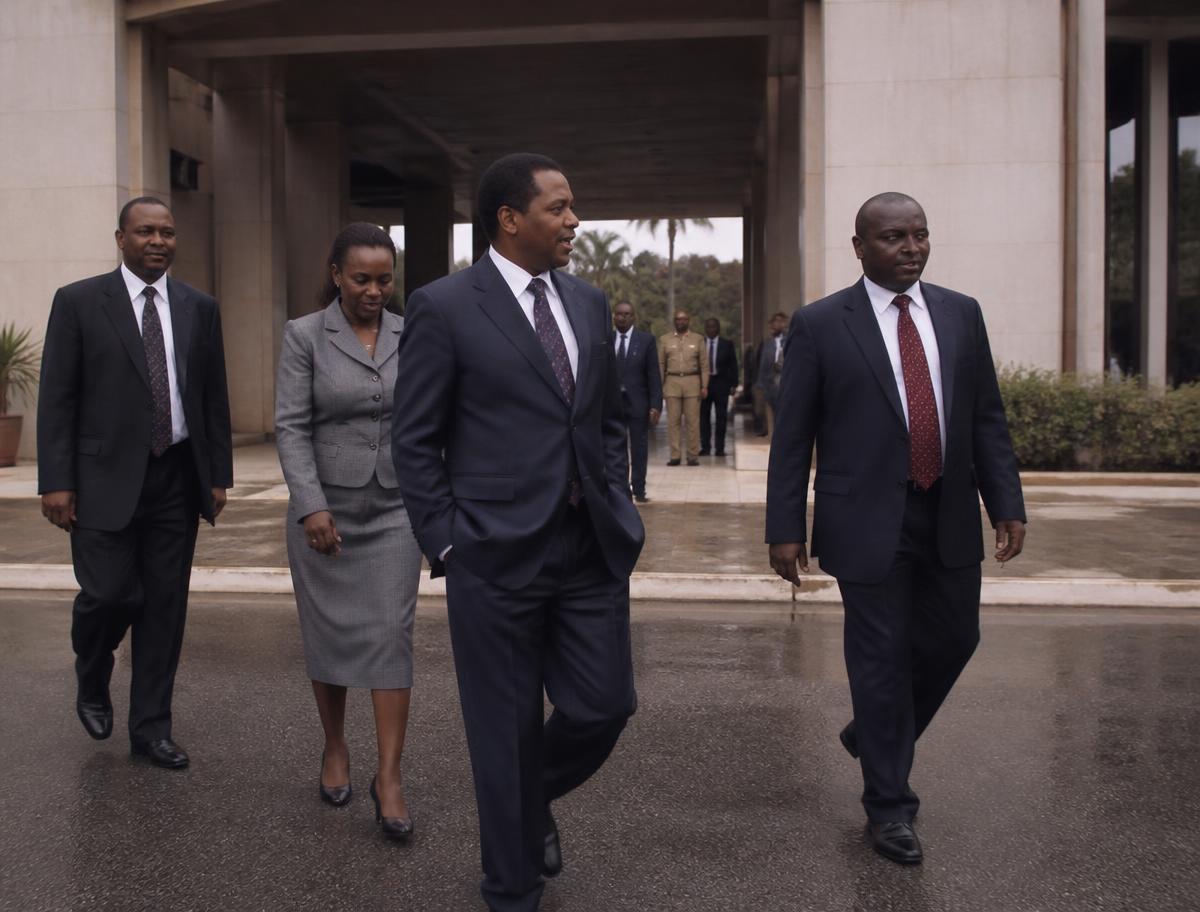
Officials walking across the forecourt of a government ministry building
Policy commitments are made in institutions; they are judged by what reaches households.

Six guiding principles

Principle

Integration

What it means in practice

Addressing interconnected vulnerabilities through comprehensive, holistic responses that recognize the interdependence of social challenges.

Principle

Inclusion

What it means in practice

Ensuring the meaningful participation and benefit of all, especially persons with disabilities, older persons, women, youth, and the most marginalized.

Principle

Partnership

What it means in practice

Leveraging the collective strengths of diverse actors—government, civil society, faith-based organizations, and private sector—for greater impact.

Principle

Accountability

What it means in practice

Maintaining transparent governance, measurable results, and responsible stewardship of resources.

Principle

Sustainability

What it means in practice

Building local capacity, systems, and ownership that endure beyond project cycles.

Principle

Alignment

What it means in practice

Full coherence with African Union frameworks, priorities, and institutional structures.

The cascade

A cascade, not a list of problems

Social protection deficits, displacement, youth exclusion and financial exclusion are routinely addressed as separate sectors with separate financing and separate reporting. They are, in practice, sequential stages of the same failure.

A household without protection absorbs a shock by withdrawing children from school and liquidating productive assets. Reduced livelihood capacity narrows the options available to young people. Where those options narrow far enough, crime and substance abuse become the visible symptom of an economic condition — and are then policed rather than prevented.

Financing each stage separately means paying repeatedly for the consequences of the stage before it. The six-pillar architecture exists to interrupt that sequence at the point where it starts.

Supporting context

Dimension

Legal form

Position

Company limited by guarantee, incorporated in the United Kingdom. No share capital and no distribution of surplus.

Dimension

Policy anchor

Position

African Union Agenda 2063 and the Social Agenda, with sector alignment to continental child protection, humanitarian and crime prevention instruments.

Dimension

Operating model

Position

Intermediary. ASCIPD structures, governs and reports on portfolios; delivery runs through partners who already hold reach and standing.

Dimension

Financing instrument

Position

The ASCIPD Social Development & Crime Prevention Fund, structured as a pooled instrument with portfolio-level governance.

Dimension

Current stage

Position

Pre-launch. Consortium formation, governance design and founding partner engagement are underway.

The consortium is forming now. Founding participation shapes the portfolio architecture, not just its funding.